“What’s the Difference Between Clarity HQ and Syft Analytics?”
An honest answer to the question firms are asking as Syft transitions into Xero.
In brief: Clarity HQ and Syft Analytics both serve accounting firms, but they solve fundamentally different problems. Syft is a financial reporting and automation platform that generates beautiful, client-ready reports very quickly and integrates deeply with Xero. Clarity HQ is a complete advisory system, combining the CLEAR methodology, Numina AI assistant, productised service model, and team enablement, that helps firms package, price, sell, and deliver ongoing business advisory. Syft presented the numbers beautifully. Clarity HQ provides the system for what to do about them.
If you’ve used Syft Analytics, you know one thing for certain: it creates financial reports fast. Really fast. The automation, the clean design, and the speed of report generation made Syft exceptional at financial reporting.
But Syft was acquired by Xero in September 2024. For firms that rely on Syft, that raises questions: What happens next? Should we move? Is it time to think about alternatives?
It’s a fair time to ask: what are we actually looking for in a financial reporting and advisory system? Let’s answer that honestly.
What Syft Analytics Does (and Does Well)
Syft was a financial reporting and automation platform built in South Africa. Before its acquisition by Xero in September 2024, it served over 75,000 customers with pricing ranging from $19 to $799 per month. The company became known for one core strength: speed.
Here’s what Syft did genuinely well:
- Automated financial reporting that pulls data and generates client-ready reports in seconds
- Clean, intuitive dashboards that made financial data easy to understand and present
- KPI dashboards and benchmarking, so clients could see how they compared to industry averages
- Cash flow analysis and financial consolidation for groups and multi-entity structures
- Budget vs actuals reporting with variance analysis and commentary generation
- Seamless integration with Xero, pulling data automatically and reducing manual entry
Syft was built around speed and automation. You connected your Xero data, and Syft did the heavy lifting, generating reports, creating dashboards, running KPI analysis. That was its superpower. And if your main need was “how do I present financial data to my clients in a polished, professional way?”, Syft delivered.
For firms that used Syft for reporting and presentation, the experience was smooth and effective. The clean UI and fast report generation meant accountants could spend less time wrestling with spreadsheets and more time actually delivering insights.
Where Clarity HQ and Syft Diverge
Here’s what matters.
Syft answered one very important question: “How do I create professional financial reports and present KPIs to my clients, quickly?” It solved the reporting presentation problem brilliantly.
But what happens after the report lands on the client’s desk?
That’s where most firms get stuck. You’ve generated a beautiful Syft report. You’ve shown the client their cash position is tighter than they expected. They acknowledge it. They ask what to do about it. And then nothing changes, because the accountant doesn’t have a structured system for turning that insight into an action plan or a recurring advisory engagement.
Syft was excellent at automating the report. But reporting alone doesn’t create advisory. It creates a moment for advisory. What happens after that moment depends on whether the accountant has a system in place.
The core difference: Syft is a financial reporting automation tool that generates what happened in a client’s business. Clarity HQ is a complete advisory delivery system that helps accounting firms turn those insights into packaged, priced, and repeatable advisory services.
What Clarity HQ Does Differently
Clarity HQ isn’t a reporting tool. It doesn’t compete with Syft on automation speed or dashboard design. Instead, it picks up exactly where Syft stops.
Clarity HQ is the system that turns financial insight into a structured, profitable advisory service. Here’s how:
- A Defined Methodology (The CLEAR Advisory Map)
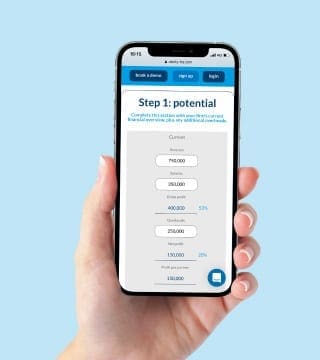
Syft gives you the reports. Clarity HQ gives your team a structured process for what to do with them. The CLEAR Advisory Map walks accountants through Current, Leaderboard, Endgame, Actions, Review.
This means when your team sits down with a client, they’re not improvising. They have a defined conversation framework, specific numbers to focus on, and a process that produces a tangible outcome — every time.
- A Productised Service Model with Defined Pricing
Here’s a problem Syft can’t solve: what do you actually charge for advisory?
Most firms that use Syft for reporting still give away the insight for free. The automated management report goes out, the partner glances at it, and there’s no engagement letter, no defined service, and no recurring fee.
Clarity HQ includes a four-tier productised advisory model. Each tier has defined deliverables, a meeting cadence, and value-based pricing calculated from the client’s profit improvement potential. The system answers the three questions that stop most firms from monetising advisory: What do I sell? What do I charge? What does the client actually get?
- Numina: AI That Prepares the Advisory Conversation
Syft uses automation to produce reports. Clarity HQ’s Numina AI uses data to prepare advisory conversations.
Numina analyses up to five years of client financial data and generates specific talking points, identifies which of the 7 Key Numbers to focus on, runs sensitivity analysis against industry benchmarks, and prepares suggested actions based on the client’s sector and trends.
Syft’s output is a report. Numina’s output is a prepared, confident accountant ready to have the advisory conversation.
- Hartley: The Client-Facing AI That Protects the Advisory Relationship
Numina prepares the accountant. Hartley serves the client. Hartley is Clarity HQ’s client-facing AI advisory assistant (now live, in beta) that connects to the client’s real financial data and answers their questions between meetings.
This matters especially in the context of the Xero acquisition. Xero now has its own AI layer (JAX, powered by Anthropic’s Claude) that answers client questions directly, bypassing the firm entirely. Hartley is the antidote: it gives clients the AI experience they want while keeping the firm at the centre of the relationship. The firm gets full visibility into what clients are asking. Hartley escalates to the right person when a question needs a human conversation. It answers the client AND creates revenue for the firm. JAX answers the client. Hartley answers the client and protects the relationship.
- A Buying Experience with Proven Conversion
Syft helps you demonstrate value through automated reporting. But it doesn’t include a process for converting that demonstrated value into a paid advisory engagement.
Clarity HQ includes a structured diagnostic pathway, a “buying experience” that takes a client from an initial conversation to a signed engagement without the accountant ever needing to “sell.” The client’s own numbers make the case. Clarity HQ’s data shows a 66% conversion rate from diagnostic to ongoing advisory engagement.
- Team Enablement, Not Partner Dependency
Many firms use Syft effectively, but only the partners know how to interpret the reports and have the advisory conversations. That creates a bottleneck.
Clarity HQ is designed so the entire team can deliver advisory. The CLEAR methodology provides the structure. Numina does the preparation. The productised service model defines what to deliver. A manager or senior accountant can deliver the same quality advisory conversation that used to require a partner’s decades of experience.
Clarity HQ vs Syft Analytics: Side-by-Side Comparison
Here’s a direct comparison of what each platform provides:
| Capability | Syft Analytics | Clarity HQ |
| Primary purpose | Financial reporting automation and KPI dashboards | Complete advisory delivery system (methodology + technology + service model) |
| Advisory methodology | Not provided, relies on the accountant’s own approach | CLEAR Advisory Map (5-step structured process for every engagement) |
| Report generation | Fastest in class, automated, beautiful, Xero-integrated | Not the focus, Clarity HQ complements existing reporting tools |
| AI capability | Automation and data organisation for report production | Numina, purpose-built AI for advisory preparation and conversation readiness |
| Service packaging | Not provided | Four-tier productised service model with defined deliverables per tier |
| Pricing framework | Not provided, firms set their own fees | Value-based pricing calculated from client profit improvement potential |
| Client conversion | Demonstrates value through reports (no structured sales process) | Structured diagnostic pathway with 66% conversion rate |
| Team scalability | Partners typically interpret reports and lead conversations | Entire team delivers advisory using methodology + AI preparation |
| Post-acquisition status | Acquired by Xero (Sept 2024), being embedded as native features | Independent advisory platform |
| Primary problem solved | Creating and presenting financial reports quickly to clients | Packaging, pricing, delivering, and scaling advisory services |
The Xero Acquisition: What It Means for Your Firm
In September 2024, Xero acquired Syft Analytics for up to $70 million AUD. For firms that have relied on Syft as a standalone platform, this is an important turning point.
Here’s what’s happening: Syft’s technology is being embedded into Xero as native reporting features. That’s good news and something to plan for, in equal measure.
The good news: Xero is a massive platform. Syft’s automated reporting capabilities will eventually reach millions of Xero users as built-in features. The technology itself isn’t going away. It’s being integrated.
What to think about: If you’re currently using standalone Syft, you’re likely to see a gradual transition. Your firm needs to decide:
- Do we move all our reporting to Xero’s native features as they roll out?
- Do we migrate to another specialist reporting tool before that transition becomes urgent?
- Do we use the transition as an opportunity to build an advisory system, not just a reporting system?
The acquisition itself shouldn’t be seen as a reason for change. But it does signal that for firms seeking independence and long-term stability in their advisory platform choice, a specialist advisory system, one that isn’t at risk of being absorbed into a larger platform, becomes more valuable.
That’s part of why accounting firms are looking at Clarity HQ right now. It solves the advisory system problem. And it doesn’t depend on Syft’s future or Xero’s roadmap.
The Real Question to Ask Yourself
When you’re evaluating tools after Syft, the question isn’t really “Clarity HQ or Syft?” It’s “What do we actually need to build as a firm?”
If your answer is: “We need fast, beautiful financial reporting that integrates with Xero”
Then Xero’s native reporting features (the embedded Syft technology) will likely serve you well. That’s the direction the platform is heading.
If your answer is: “We have good reporting, but we can’t turn it into a packaged, priced, repeatable advisory service that the whole team can deliver”
That’s what Clarity HQ was built for.
And here’s the truth: for most firms, the answer is both. You probably need strong financial reporting (whether through Syft, Xero native features, Fathom, or another tool), and you need Clarity HQ. They’re not competing. They’re solving different problems. Reporting makes the data visible. Clarity HQ turns that visibility into a service.
Can You Use Syft (or Xero Reporting) and Clarity HQ Together?
Absolutely. And most firms will need to.
Think of it this way: Syft is the presentation layer. It makes client data visual, understandable, and professional. Clarity HQ is the complete advisory layer. It provides the methodology, the advisory delivery mechanics, pricing, service structure, and AI preparation that turns those presentations into a recurring revenue stream.
Syft shows the client their cash position. Clarity HQ’s CLEAR methodology helps the accountants deliver advisory services and tells them which of the 7 Key Numbers to focus on. Numina prepares the talking points and sensitivity analysis. The productised service model defines what the client is paying for and how it is delivered. And the diagnostic pathway converts the conversation into a signed engagement.
Syft and Clarity HQ are complementary, not competitive. Syft presented the numbers. Clarity HQ builds the advisory service around them.
What We Won’t Do
We’re not going to tell you that Syft’s acquisition by Xero means you should panic. We won’t do that because it isn’t fair. Syft was genuinely excellent at what it did, automated financial reporting, and being acquired by Xero is a validation of that, not a failure.
What we will say is this: reporting alone doesn’t create an advisory service. It creates an informed moment. What you do with that moment — how you package it, price it, deliver it consistently, and scale it across the team, that’s the hard part. And that’s the part Syft wasn’t designed to solve.
Clarity HQ was.
The Bottom Line
Syft presented the numbers beautifully. Clarity HQ helps you build the advisory service around them.
If you’ve been using Syft and producing great reports but struggling to convert that into paid, recurring advisory, you’re not alone. Or, if you are the only one in your firm able to deliver those services at the moment. That’s the gap most firms are sitting in right now. Beautiful data presentation, no system to monetise it.
The Syft acquisition means you’re now thinking about your reporting platform. That’s the right moment to also think about your advisory system.
Clarity HQ fills that gap. Methodology. Pricing. Service structure. AI preparation. Team enablement. The complete system for turning financial insight into advisory revenue.
That’s what Clarity HQ is building.
Frequently Asked Questions
Common questions accounting firms ask when comparing Clarity HQ and Syft.
Is Syft a competitor to Clarity HQ?
Not really. Syft was a financial reporting automation platform. Clarity HQ is an advisory delivery system. Syft helped accounting firms create beautiful, client-ready reports quickly through automation and Xero integration. Clarity HQ helps firms package, price, sell, and deliver advisory services using a defined methodology, AI preparation, and productised service model. Most firms would benefit from using both. However, with Syft now being integrated into Xero, firms need to decide on their reporting strategy independently.
What happens to Syft Analytics after the Xero acquisition?
Syft Analytics was acquired by Xero in September 2024 for up to $70 million AUD. Xero is now embedding Syft’s reporting technology as native features within the Xero platform. This means over time, standalone Syft features will be available directly in Xero. Firms currently using standalone Syft will see a gradual transition. The technology isn’t disappearing, it’s being integrated into Xero.
Should I switch from Syft to something else?
That depends on your firm’s priorities. If you’re primarily focused on automated financial reporting, Xero’s native reporting features (powered by embedded Syft technology) should serve you well. If you’ve been using Syft for reporting but struggling to build an advisory business around it, that’s the moment to consider a dedicated advisory system like Clarity HQ. The two serve different purposes.
Can I use Clarity HQ alongside Xero’s reporting features?
Yes, absolutely. Clarity HQ isn’t a reporting tool, it’s an advisory delivery system. You can continue using Xero’s native reporting (including Syft’s automated features) for client reporting and KPI dashboards, while using Clarity HQ for advisory methodology, pricing, service structure, AI-powered preparation, and team enablement.
What is the CLEAR Advisory Map?
The CLEAR Advisory Map is Clarity HQ’s five-step methodology for delivering business advisory in accounting firms. CLEAR stands for Current, Leaderboard, Endgame, Actions, Review. It provides a structured, repeatable process that the whole team can follow, not just partners.
What is Numina and how does it differ from Syft’s automation?
Numina is Clarity HQ’s proprietary AI advisory assistant. While Syft used automation to generate reports and dashboards from client data, Numina uses client financial data to prepare the advisory conversation itself, generating talking points, running sensitivity analysis, identifying which Key Numbers to focus on, and suggesting actions based on the client’s sector. Syft’s output was a report. Numina’s output is a prepared accountant ready for an advisory conversation.
What if I’ve been using Syft and want to transition to an advisory business model?
That’s actually the ideal starting point. If you’ve been using Syft for reporting, you already have client data flowing through an automated system. What you need is the advisory system: the methodology to structure conversations, the pricing model to monetise them, the AI preparation to make them consistent, and the team enablement to scale them beyond the partners. That’s exactly what Clarity HQ provides. The Xero acquisition is a good moment to think about this transition.
What is Hartley and how does it differ from Numina?
Numina is Clarity HQ’s internal AI that prepares the accountant for advisory conversations. Hartley is the client-facing AI advisory assistant (now live, in beta) that connects to the client’s real financial data and answers their questions between meetings. Hartley gives the firm full visibility into what clients are thinking about, creates advisory opportunities, and escalates to the right person in the firm when a question needs a human conversation. Numina prepares the accountant. Hartley serves the client.
Want to see how Clarity HQ complements your reporting platform? Book a 30-minute walkthrough and we’ll show you the complete system — methodology, technology, service model, and the numbers behind it.
About Clarity HQ
Clarity HQ is a NextGen Advisory system operating across 17+ countries, helping accounting firms build scalable advisory services through methodology, technology, education, and support.
Our 90-day Blueprint programme proves the model. Our Accelerator events build conviction. And our Academy builds the firm.
Learn more at clarityhq.com or check out our new client-facing AI Advisory Assistant for Accounting firms, askhartley.ai